
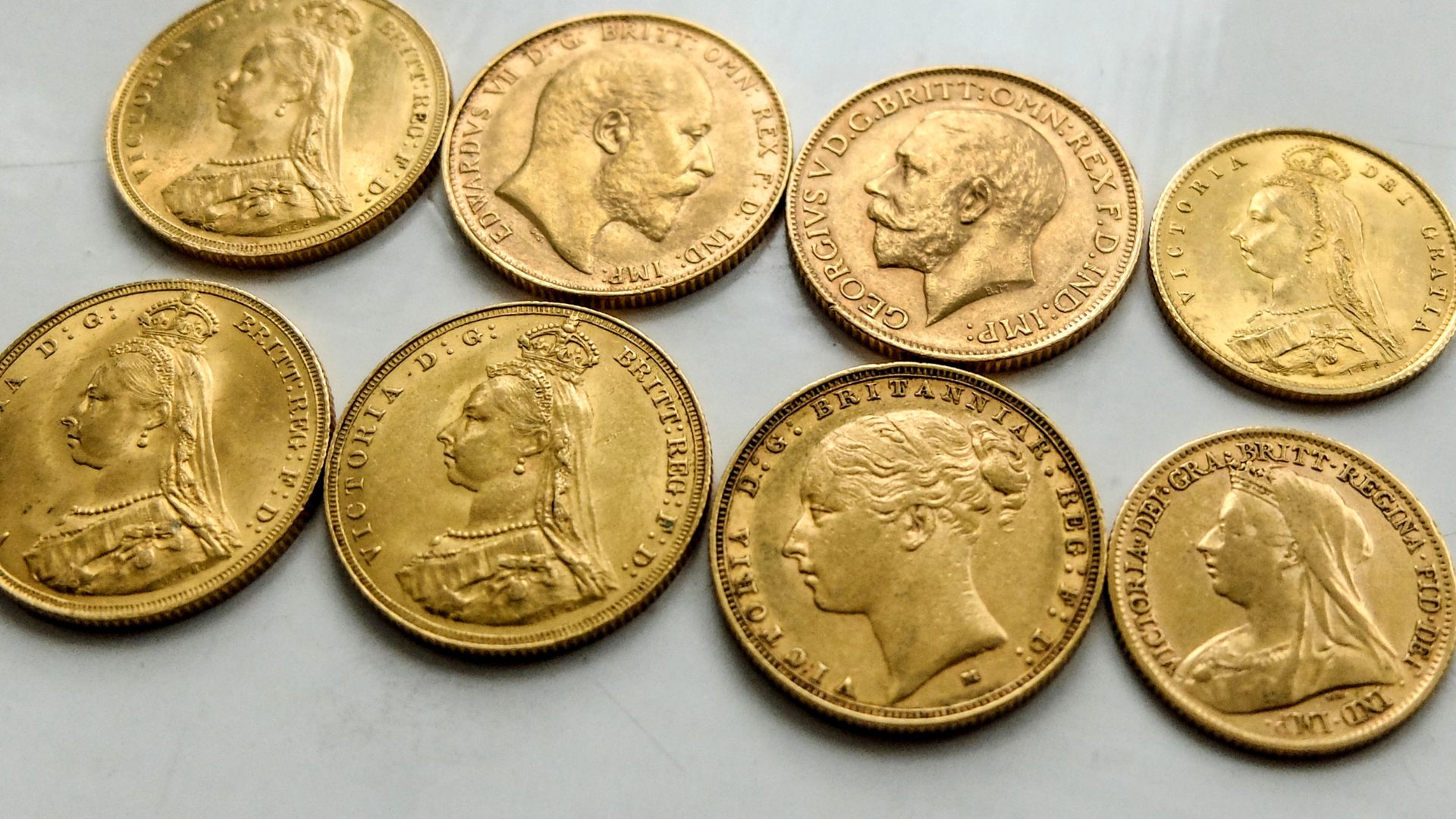
The British gold sovereign coin stands as a testament to the legacy and resilience of British coinage. With a history spanning over 500 years, the british sovereign has transformed from a popular currency to a cherished asset for collectors and investors alike. Modern Sovereigns, struck from 22-carat gold and weighing 7.98 grams, carry forward a rich tradition that intertwines economic value with historical prestige, including the esteemed british sovereign gold coins.
The allure of the Gold Sovereign is not merely in its gold content but in its storied past and exquisite design. The obverse typically features a portrait of the reigning monarch, while the reverse showcases the timeless image of St. George slaying the dragon, a symbol of courage and victory.
This guide will delve into the fascinating journey of the Sovereign, its dimensions, design, and much more, offering a comprehensive view of this remarkable coin.
History of the British Gold Sovereign
The British Gold Sovereign was first minted in 1489 during the reign of Henry VII, marking the inception of a coin that would become one of the most celebrated in the world. Initially, these coins were made from 23-carat gold and weighed approximately 15.55 grams, making them the largest and most valuable British gold coins of their time. However, the coin’s journey was far from linear, as it experienced periods of dormancy and revival.
The Great Recoinage of 1816 was a pivotal moment in the Sovereign’s history. Following the defeat of Napoleon at Waterloo in 1815, the British government sought to stabilize the economy by overhauling the coinage system. This led to the reintroduction of the Sovereign in 1817, with a new 20-shilling coin that bore the old name but featured a much lighter weight of 7.32 grams. This new coin quickly became a cornerstone of British and international trade.
Throughout the 19th century and beyond, the Gold Sovereign saw various design changes and shifts in its usage. While its role in daily transactions diminished in the early 20th century, its legacy endured. The coin’s significance during the British Empire and its continued production in the modern era underscore its lasting impact on both numismatics and global trade.
Return of the Sovereign
The Sovereign was reintroduced in 1817 following significant historical events. Post-Napoleon’s defeat at Waterloo, the British government reformed its coinage system during the Great Recoinage of 1816. Initially intended to reintroduce the 21-shilling guinea, public preference led to the creation of a new 20-shilling coin, which was named the Sovereign.
The new 7.32-gram Sovereign, designed by celebrated engraver Benedetto Pistrucci, quickly gained prominence. The reverse depicted St. George slaying the dragon, symbolizing courage and victory, while the obverse bore the king’s portrait. This iconic design established the Sovereign as a staple in British and international trade during the British Empire’s height.
Sovereigns throughout the Queen Victoria era and beyond
The 19th century saw various design alterations to the Sovereign. In 1825, the public saw the St. George image replaced by the royal coat of arms, a change that was met with disfavor. However, under Queen Victoria’s reign, Pistrucci’s design was reinstated, restoring the coin’s traditional appearance.
Gold Sovereigns saw a decline in daily transactions by the early 20th century. During World War I, the British government encouraged citizens to exchange their Sovereigns to support the war effort. Production at the Royal Mint ceased in 1917, though colonial mints continued until 1932.
Gold Sovereigns post-WWI and in the modern era
In the 1930s, it became illegal for U.S. citizens to own foreign gold coins, leading many Sovereigns to be melted into bullion bars. However, their practical value persisted. In World War II, British Gold Sovereigns were included in Allied pilots’ survival kits for use as emergency currency.
In 1957, the Royal Mint resumed Gold Sovereign production to meet growing post-war demand. Currently, most Gold Sovereigns are minted at the Royal Mint in Llantrisant, South Wales. A significant milestone was reached in 2013 when 50,000 commemorative Sovereigns were minted in India, the first outside the UK in nearly a century.
Over a billion British Sovereigns have been minted throughout history, though many were melted down and repurposed as gold bars or ingots. The British Gold Sovereign remains iconic and celebrated, with rare and historic pieces held at the Royal Mint Museum for public appreciation.
How big is a Gold Sovereign Coin?
The dimensions and weight define the identity of a Gold Sovereign. A standard Gold Sovereign weighs 7.98 grams, with 7.32 grams of that being pure gold. It measures 22.05 millimeters in diameter and 1.52 millimeters in thickness.
These specifications make the Sovereign a compact and significant piece of gold, embodying both value and historical significance.
Sovereign size chart
A size chart is immensely helpful for those interested in variations of British Gold Sovereigns. All Gold Sovereigns are made from 22-carat gold (91.67%) but vary in size and weight.
The standard Gold Sovereign, Half Sovereign, and smaller denominations like the 1/8 Sovereign each have distinct dimensions and gold content, catering to various preferences and investment needs.
| SOVEREIGN TYPE | WEIGHT (GRAMS) | DIAMETER (MM) | THICKNESS (MM) | GOLD CONTENT (GRAMS) |
| Half Sovereign | 3.99 | 19.30 | 1.00 | 3.66 |
| Full Sovereign | 7.98 | 22.05 | 1.52 | 7.32 |
| Double Sovereign (aka £2 Sovereign) | 15.98 | 28.40 | 2.00 | 14.63 |
| Quintuple Sovereign | 39.94 | 36.02 | 2.89 | 36.61 |
Gold Sovereign coin design
The Gold Sovereign’s design is one of its most captivating features. Typically, the obverse side of the coin features a portrait of the reigning monarch, while the reverse showcases Benedetto Pistrucci’s legendary depiction of St. George slaying the dragon. This design, synonymous with the British Gold Sovereign, embodies the coin’s artistic and historical heritage.
Obverse of the Gold Sovereign
Traditionally, the obverse of the British Gold Sovereign features the reigning monarch’s portrait. Early coins depicted King George III, while Queen Victoria’s youthful image graced the obverse during her reign. Elizabeth II sovereigns’ portrait was updated multiple times over the years to reflect her age, maintaining the coin’s relevance and historical continuity.
Since 2023, King Charles III has featured on the obverse, marking a new chapter in the Sovereign’s journey.
Reverse of the Gold Sovereign
The reverse of the Gold Sovereign is renowned for St. George slaying the dragon, a masterpiece by Italian engraver Benedetto Pistrucci. This design, iconic since its introduction, symbolizes courage and victory. Variations have occurred, however.
For instance, during Queen Victoria’s reign, the reverse occasionally featured additional elements such as a shield. More recently, the Royal Coat of Arms appeared on the reverse to commemorate Queen Elizabeth II’s Platinum Jubilee.
What’s the difference between a Sovereign and Half Sovereign?
The primary differences between a Sovereign and a Half Sovereign are size, weight, and gold content. A full Gold Sovereign weighs 7.98 grams with a diameter of 22.05 millimeters, while a Half Sovereign weighs 3.99 grams and measures 19.30 millimeters in diameter. Both coins are made from 22-carat gold (91.67% purity), but the amount of pure gold differs: 7.32 grams in a full Sovereign and 3.66 grams in a Half Sovereign.
Additionally, the face value of a Sovereign is £1, while a Half Sovereign is valued at 50 pence. Despite these nominal values, their true worth is based on the current price of gold, making both coins valuable for investors.
How much gold is in a Sovereign?
Investors must understand the gold content of a Sovereign. Each Gold Sovereign is made from 22-carat gold, which translates to a purity of 91.67%. The coin weighs 7.98 grams, with 7.32 grams of pure gold. The remaining weight is typically copper, enhancing the coin’s durability and giving it a rich golden hue.
How much does a Gold Sovereign weigh?
A Full Sovereign coin’s weight is a defining characteristic. A standard Gold Sovereign weighs 7.98 grams, with 7.32 grams of pure gold and the rest as a copper alloy. This composition ensures the coin’s robustness and distinct color.
How big is a ⅛ Sovereign?
The 1/8 Sovereign, a smaller denomination, weighs 1 gram and has a diameter of 11 millimeters. Minted to commemorate the 80th anniversary of D-Day at the Royal Dutch Mint in the Netherlands, these coins were the first Gold Sovereigns produced in mainland Europe.
Tax implications of buying Gold Sovereigns in the US
US residents can benefit from certain advantages when acquiring Gold Sovereigns. One of the key benefits is the exemption from Capital Gains Tax (CGT) for coins considered collectibles, which may apply to Gold Sovereigns depending on specific conditions such as their rarity and value.
Additionally, Gold Sovereigns are often exempt from Value Added Tax (VAT) due to their classification as investment-grade gold. Although Gold Sovereigns are not composed of 99.5% pure gold, their status as legal tender in the UK grants them VAT-free status in many cases when imported to the US.
Strike-on-the-day Gold Sovereigns
Strike-on-the-day Gold Sovereigns are unique coins minted on the same day as the event or occasion they commemorate, including those sovereigns minted specifically for these occasions. These coins typically have limited mintages, making them highly sought by collectors.
| DATE | EVENT | DESIGN | DESIGNER | MINTAGE |
| 2 June, 2012 | Elizabeth II Diamond Jubilee | Modern Saint George and the Dragon | Paul Day | 2,012 |
| 2 June, 2013 | Elizabeth II Diamond Coronation | Saint George and the Dragon | Benedetto Pistrucci | 2,013 |
| 22 July, 2013 | Birth of Prince George of Wales | 2,013 | ||
| 22 July, 2014 | Prince George of Wales 1st Birthday | 398 | ||
| 2 May, 2015 | Birth of Princess Charlotte of Wales | 743 | ||
| 22 July, 2015 | Prince George of Wales 2nd Birthday | 400 | ||
| 11 June, 2016 | Elizabeth II 90th Birthday | 499 | ||
| 6 February, 2017 | Elizabeth II Sapphire Jubilee | 739 | ||
| 1 July, 2017 | 200th Anniversary of Saint George and the Dragon Design | 1,817 | ||
| 20 November, 2017 | Elizabeth II Platinum Wedding Anniversary | 744 | ||
| 2 June, 2018 | Elizabeth II Sapphire Coronation | 650 | ||
| 22 July, 2018 | Prince George of Wales 5th Birthday | 750 | ||
| 24 May, 2019 | Birth of Victoria 200th Anniversary | 649 | ||
| 31 January, 2020 | Withdrawal from the European Union | 1,500 | ||
| 8 May, 2020 | Victory in Europe 75th Anniversary | 750 | ||
| 15 August, 2020 | Victory over Japan 75th Anniversary | 750 | ||
| 12 June, 2021 | Elizabeth II 95th Birthday | 1,195 | ||
| 6 February, 2022 | Elizabeth II Platinum Jubilee | Royal Coat of Arms | Timothy Noad | 1,200 |
| 6 May, 2023 | Charles III Coronation | Saint George and the Dragon | Benedetto Pistrucci | 1,250 |
| 14 November, 2023 | Charles III 75th Birthday | 750 | ||
| 6 June, 2024 | D-Day 80th Anniversary | 1,000 |
Their limited availability and special significance often enhance their value beyond the gold content.
Summary
The British Gold Sovereign is not just a coin but a symbol of historical significance, enduring value, and artistic excellence. From its inception in 1489 to its reintroduction after the Battle of Waterloo, and its role during the British Empire, the Sovereign has a rich and varied history. Its design, featuring the reigning monarch on the obverse and St. George slaying the dragon on the reverse, remains iconic.
For collectors and investors, the Gold Sovereign offers tangible value and significant tax advantages. Whether you are drawn to its historical legacy, its aesthetic appeal, or its investment potential, the British Gold Sovereign stands as a testament to the enduring allure of gold coinage.
Frequently Asked Questions
How much is a 1922 gold Sovereign worth today?
The value of a 1922 gold Sovereign today typically ranges from £300 to £350, depending on its condition and market demand. It is always advisable to consult a reputable dealer for an accurate appraisal.
When was the British Gold Sovereign first introduced?
The British Gold Sovereign was first introduced in 1489 under the reign of Henry VII. This marks the beginning of a significant era in British coinage.
What is the gold content and weight of a standard Gold Sovereign?
A standard Gold Sovereign contains 7.32 grams of pure gold and weighs a total of 7.98 grams.
What design is typically found on the reverse side of the Gold Sovereign?
The reverse side of the Gold Sovereign typically features the image of St. George slaying the dragon, designed by Benedetto Pistrucci. This iconic representation has become synonymous with the coin itself.
What significant event led to the reintroduction of the Gold Sovereign?
The defeat of Napoleon at the Battle of Waterloo in 1815 significantly led to the reintroduction of the Gold Sovereign, as it was part of the broader Great Recoinage of 1816. This event marked a vital shift in British currency.


